
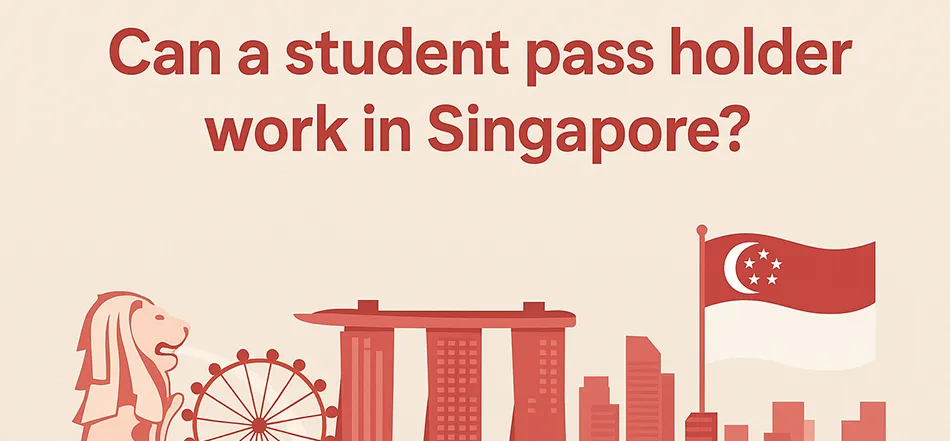
Singapore has become a leading destination for international students seeking quality education and professional exposure. Many students studying in Singapore often wonder can a student pass holder work in Singapore? The short answer is yes, but under specific conditions. Understanding these guidelines helps students plan their finances, gain experience, and stay compliant with Singapore’s immigration laws.
Quick answer: Yes. A Student Pass holder enrolled full-time at an MOM-approved institution may work up to 16 hours per week during term time and full-time during scheduled vacation periods, with no separate work pass required. Students at institutions not recognised by MOM cannot work while studying. (Source: Singapore Ministry of Manpower.)
Understanding the Student Pass in Singapore
A Student Pass is issued by Singapore’s Immigration & Checkpoints Authority (ICA) to foreign students enrolled in full-time courses at approved educational institutions. It allows students to legally reside in Singapore for the duration of their studies. However, this pass does not automatically grant work rights work eligibility depends on several factors such as the type of institution, course, and duration of study.
Can International Students Work in Singapore?
Yes, international students can work in Singapore under certain conditions. The Ministry of Manpower (MOM) allows student pass holders from approved institutions to take on part-time work during their term and full-time employment during vacation periods. These opportunities, however, come with restrictions and requirements designed to ensure that work does not interfere with academic performance.
Work Regulations for Student Pass Holders
To maintain legal status, student pass holders must follow the official employment guidelines set by the Ministry of Manpower:
1. During Term Time
- Students can work up to 16 hours per week.
- They must be enrolled in a full-time program at an approved institution, such as NUS, NTU, or SMU.
- The employer does not need to apply for a separate work pass.
2. During Vacation Periods
- Students can work full-time during scheduled school breaks or holidays.
- There is no restriction on working hours during these periods.
- The work must not affect the student’s return to classes or exam schedules.
3. Unapproved Institutions
If a student is studying at a private institution not recognized by MOM, they are not allowed to work while holding a student pass. In such cases, engaging in employment may lead to penalties or the revocation of the pass.
Common Job Opportunities for Students
Many international students in Singapore take up part-time jobs to earn extra income and gain experience. Some common job options include:
- Retail and customer service roles.
- F&B service crew positions.
- Administrative support or data entry.
- Tutoring or teaching assistance.
- Internships related to their field of study.
These roles help students build transferable skills and better understand the local work culture.
Employment Pass vs Student Pass Work Rights
It’s important to differentiate between a Student Pass and an Employment Pass. While the student pass allows limited working hours, the employment pass is a full-time work permit for professionals. If a student wishes to continue working after graduation, they must switch from a student pass to a valid work visa such as the Employment Pass (EP) or S Pass, depending on the job and salary criteria.
Can Student Pass Holders Do Internships?
Yes, internships are permitted under certain conditions:
- The internship must be approved by the educational institution as part of the curriculum.
- The host company must collaborate with the school to provide an internship offer.
- No additional work pass is required if the internship is officially endorsed by the institution.
For internships outside the curriculum, a Training Work Permit may be necessary, and the employer is responsible for obtaining it.
Penalties for Working Without Permission
Working without valid permission is a serious offence in Singapore. Students who breach the conditions of their pass may face:
- Cancellation of the Student Pass.
- Fines or imprisonment.
- Deportation and future entry restrictions.
Hence, it’s crucial to ensure all employment activities comply with MOM regulations before accepting any job offer.
Advantages of Working While Studying in Singapore
While restrictions apply, part-time work can provide many benefits for international students:
- Financial independence: Earn extra income to manage living expenses.
- Work experience: Gain exposure to Singapore’s professional culture.
- Networking opportunities: Connect with potential employers and mentors.
- Skill development: Build soft skills such as teamwork, communication, and time management.
By balancing academics and part-time work, students can enhance their resumes and prepare for future careers.
Conclusion
So, can a student pass holder work in Singapore? Yes, as long as the job complies with Ministry of Manpower rules and the student studies at an approved institution. Working while studying can be an enriching experience, but it must never interfere with education or violate visa conditions. With proper awareness and planning, international students can make the most of their stay in Singapore, gaining both academic knowledge and valuable work experience.
Frequently Asked Questions
Can international students work part-time in Singapore?
Yes, international students holding a valid Student Pass from an approved institution can work part-time for up to 16 hours per week during school terms.
Can student pass holders work full-time in Singapore?
They can work full-time only during vacation periods approved by their school.
Do students need a separate work permit to work part-time?
No. If you are studying at an MOM-approved institution, your Student Pass is sufficient for part-time work.
Can foreign students do internships in Singapore?
Yes, internships are allowed if they are part of your school curriculum or if your employer applies for a training work permit.
What happens if a student works illegally in Singapore?
Illegal employment can lead to cancellation of the Student Pass, fines, deportation, and potential bans from re-entry.
Can foreign graduates stay and work in Singapore after graduation?
Yes. Graduates can apply for a work visa such as an Employment Pass, S Pass, or the Post-Graduation Work Holiday Pass to continue working legally.