

Understanding how to change company secretary in Singapore is an essential aspect of corporate governance. While the appointment of a company secretary is a statutory requirement under the Singapore Companies Act, organisations often underestimate the strategic importance of this role until circumstances necessitate a transition.
Whether driven by restructuring, service quality concerns, compliance requirements, or organisational growth, replacing a corporate secretary must be handled with precision. Errors or delays can expose the company to regulatory scrutiny and operational risk.
Singapore’s business ecosystem places strong emphasis on transparency and accountability. As such, any change of company secretary ACRA must follow a clearly defined process to ensure the company continues to meet statutory obligations without interruption. This advisory guide explores the procedural, legal, and governance considerations that leadership teams should evaluate when planning a secretary transition.
To understand how to change company secretary in Singapore, pass a board resolution, obtain resignation confirmation, complete Form 45B, notify ACRA via BizFile within 14 days, and update corporate records to maintain compliance.
Why the Company Secretary Role Matters More Than Many Directors Assume
Before examining the mechanics of change, it is worth recognising why the position carries such regulatory weight. A company secretary serves as the guardian of corporate compliance. The role supports directors in meeting statutory duties, maintaining accurate records, filing mandatory returns, and ensuring board decisions are properly documented.
Beyond administration, an experienced secretary contributes to stronger governance by aligning corporate practices with regulatory expectations.
When organisations experience rapid growth, ownership restructuring, or cross-border expansion, the need for a capable corporate secretary becomes even more pronounced. Replacing this function should therefore be viewed as a strategic decision rather than a purely operational one.
Can I Change My Company Secretary?
A common question among directors is, “Can I change my company secretary?” The answer is yes. Singapore law permits companies to replace their corporate secretary at any time, provided they maintain continuous appointment.
Under the Companies Act, every company must appoint a secretary within six months of incorporation and must not leave the position vacant for more than six months at any point thereafter.
This requirement reinforces the importance of planning the transition carefully so compliance remains uninterrupted. In practice, companies often coordinate the resignation of the outgoing secretary with the appointment of the successor on the same effective date.
When Should a Company Consider Replacing Its Corporate Secretary?
Although some organisations delay transitions to avoid perceived administrative complexity, several indicators suggest it may be time to evaluate alternatives.
Persistent filing delays, inconsistent regulatory advice, communication breakdowns, or limited governance support often signal misalignment between the company’s needs and the secretary’s capabilities. Likewise, companies entering new growth phases frequently require more sophisticated compliance oversight.
Understanding how to replace a company secretary becomes particularly important when the board prioritises stronger governance frameworks or prepares for investor scrutiny. Forward-looking organisations treat such transitions as part of long-term risk management rather than reactive correction.
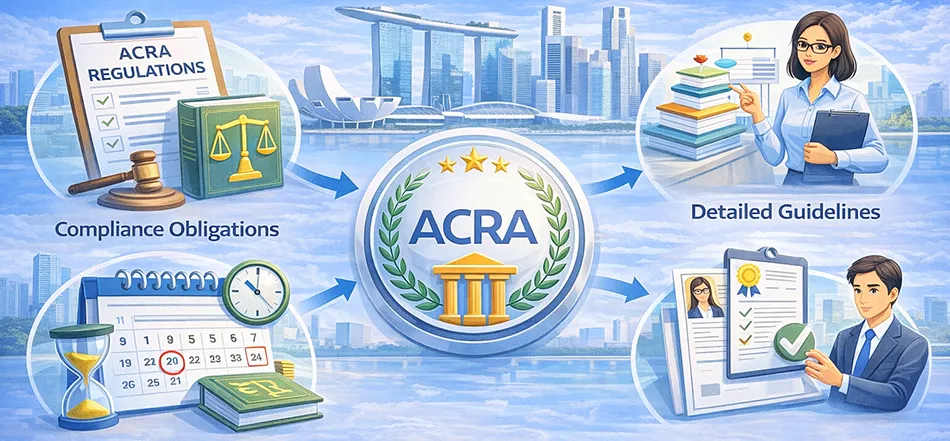
Regulatory Framework Behind the Change of Company Secretary ACRA
The change of company secretary ACRA process exists to preserve transparency within Singapore’s corporate registry.
Because the secretary is an appointed officer, ACRA must be notified promptly whenever a change occurs. This ensures public records remain accurate and stakeholders can rely on the integrity of corporate data.
Failure to update records may result in penalties and could complicate future filings. More importantly, inaccurate officer records can create governance ambiguity something sophisticated businesses actively avoid.
How to Change Corporate Secretary: A Structured Overview
For directors evaluating how to change corporate secretary, the process involves several coordinated steps that reinforce legal clarity and organisational accountability.
Rather than viewing these actions as isolated tasks, it is helpful to consider them as part of a governance workflow designed to protect the company.
Pass Board Resolution
After the board resolution, the next step is to appoint a new company secretary via ACRA Form 45B.
The first step is to pass a board resolution approving both the resignation (or removal) of the existing secretary and the appointment of the new one.
Board minutes should clearly document the decision, including the effective date. Precision is essential because these records may be referenced during audits, due diligence exercises, or regulatory reviews.
Well-prepared documentation demonstrates disciplined governance and serves as a clear indicator of a well-managed company, showing accountability, transparency, and structured processes that support compliance, decision-making, and long-term organisational credibility and operational success.
Resignation or Termination Notice
A formal resignation/termination notice establishes legal closure with the outgoing secretary. Most professional secretarial firms provide written confirmation outlining the final date of service and confirming that outstanding statutory matters have been addressed.
This step protects both parties by preventing ambiguity regarding responsibilities. Leadership teams should ensure that no critical filings remain unresolved before the transition.
Form 45B Completion
Next comes Form 45B completion, which records the consent of the newly appointed secretary. The form confirms that the individual or corporate service provider meets eligibility requirements and agrees to undertake the statutory responsibilities associated with the role.
Although procedural, this document carries regulatory significance. Without consent, the appointment cannot be properly registered. Companies should verify qualifications carefully to avoid compliance gaps later.
Notify ACRA via BizFile
Once documentation is prepared, the company must notify ACRA via BizFile within 14 days of the change. BizFile serves as Singapore’s official digital filing system, enabling secure updates to corporate records. Timely submission ensures the company remains compliant and demonstrates administrative reliability.
Even unintentional delays may lead to penalties and added risk for organisations committed to strong governance, making timely action, clear processes, and proactive compliance management essential for stability and long-term accountability and resilience overall today.
Update Records
The final step is to update records across all internal and external platforms. This includes statutory registers, corporate profiles, banking mandates, and governance documentation. Companies should also ensure directors and relevant stakeholders know who the new compliance contact is.
Careful and consistent record keeping reduces errors, avoids misunderstandings, and ensures smooth operational continuity, enabling teams to track progress, meet requirements, and make informed decisions with confidence every day across all operations and workflows consistently.
How to Replace a Company Secretary Without Disrupting Operations
Replacing a secretary need not interrupt business momentum. The most effective transitions occur when organisations align timelines, prepare documentation in advance, and appoint experienced professionals capable of assuming responsibilities immediately.
From a governance standpoint, continuity is paramount. Many companies schedule transitions at the start or end of a financial period to maintain reporting clarity.
Others conduct a broader compliance review during the change, using the opportunity to strengthen internal controls. Viewed strategically, the process becomes an upgrade rather than a disruption.
Qualities to Look for in a New Corporate Secretary
Selecting the right successor is arguably more important than the administrative mechanics of change. An effective secretary combines regulatory knowledge with practical advisory capability. Beyond filing documents, the role should support directors in navigating evolving compliance expectations.
Attributes frequently associated with high-performing corporate secretaries include responsiveness, technical competence, governance awareness, and the ability to anticipate regulatory developments.
Companies operating in complex sectors often prioritise secretarial partners who integrate seamlessly with legal and finance teams. The objective is not merely compliance, it is confidence.
Governance Advantages of Making the Right Transition
Organisations that approach secretary changes thoughtfully often experience measurable governance improvements. Clearer documentation, more reliable filing schedules, and stronger advisory support contribute to operational stability.
Investors, lenders, and regulators tend to favour companies that demonstrate administrative discipline. Accurate officer records signal that the organisation takes statutory responsibilities seriously. Over time, these practices enhance institutional credibility. In competitive markets, credibility is a strategic asset.
Avoiding Common Mistakes During the Transition
Even experienced directors occasionally underestimate the coordination required for officer changes. One frequent oversight is failing to align the outgoing and incoming appointments, inadvertently creating a temporary vacancy. Another involves delayed filings, which can attract regulatory attention.
Companies sometimes neglect to verify the eligibility of the new secretary, particularly when appointing an individual rather than a professional firm. Proactive planning mitigates these risks. A well-managed transition reflects the maturity of the organisation behind it.
The Strategic Case for Professional Corporate Secretarial Support
As regulatory frameworks grow more sophisticated, many businesses partner with corporate service providers to manage officer appointments and filings.
Professional advisors bring structured processes, deadline monitoring, and governance insight that internal teams may lack capacity to maintain consistently. For growing enterprises, this support often proves invaluable.
Engaging experienced professionals transforms compliance from a reactive obligation into a structured corporate capability. In an environment where governance standards increasingly influence investor perception, that distinction matters.
Conclusion
Knowing how to change company secretary in Singapore is fundamental to maintaining regulatory integrity and governance continuity. While the process is structured and relatively efficient, it demands careful coordination, accurate documentation, and timely filings. Forward-thinking organisations treat secretary transitions as opportunities to strengthen compliance frameworks rather than mere administrative adjustments.
In Singapore’s highly respected business environment, disciplined governance is more than a regulatory expectation; it is a competitive differentiator. By managing officer changes with precision and foresight, companies reinforce stakeholder confidence and position themselves for sustainable, well-governed growth.
Frequently Asked Questions
Can I change my company secretary in Singapore?
Yes. Companies may replace their secretary at any time, provided the position does not remain vacant for more than six months.
How to replace a company secretary?
Approve the change via board resolution, secure resignation documentation, appoint a qualified successor, file the update with ACRA, and revise corporate records.
How to change corporate secretary efficiently?
Plan the transition carefully, align appointment dates, and submit filings promptly through BizFile to avoid compliance risks.
What is the deadline for notifying ACRA?
Companies must typically report the change within 14 days to ensure public records remain accurate.
Is a company secretary mandatory in Singapore?
Yes. Every company must appoint a qualified secretary to support statutory compliance and corporate governance.